

Lithuania’s success in implementing the provisions of the Convention on Nuclear Safety was presented
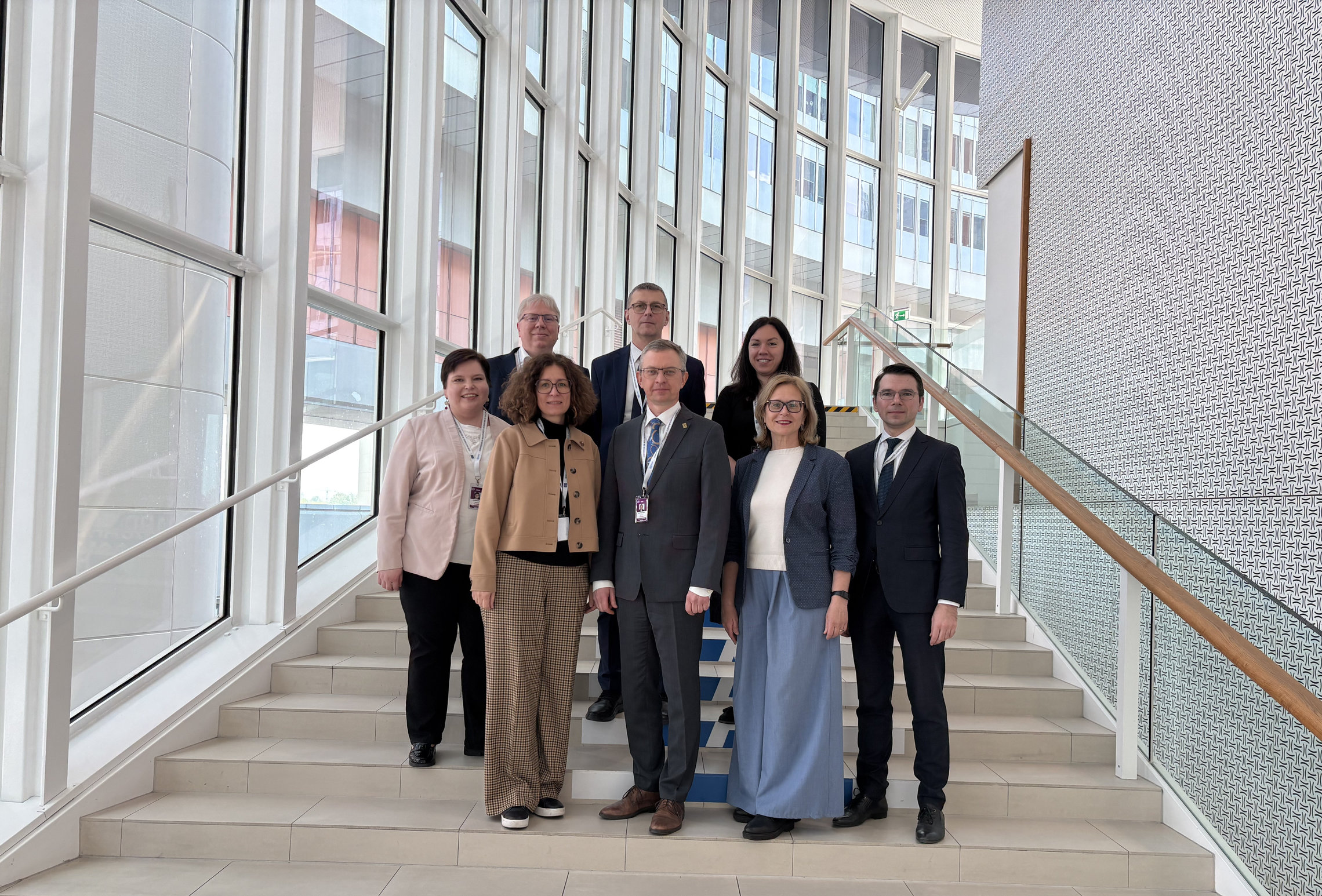
In 2026 at the 10th Review Meeting of the Convention on Nuclear Safety, held in Vienna from April 13 to 24, 2026, the Lithuanian delegation presented a report on the successful fulfilment of its obligations to ensure and improve nuclear safety in Lithuania during the three-year reporting period.
For the first time, Lithuania has introduced itself as a country with no operating nuclear installations, in accordance with the provisions of the Convention on Nuclear Safety. Under the Convention, a nuclear installation (nuclear power plant) ceases to be considered as such when all nuclear fuel has been permanently removed from it, it is safely stored in a designated storage facility, and the nuclear safety regulatory authority has approved the decommissioning plan. In April 2022, the last container of spent nuclear fuel was removed from the power units of the Ignalina NPP and safely placed in a designated storage facility. In light of this, the Lithuanian report focused primarily on ensuring emergency preparedness, including preparedness for a potential accident at the Belarusian NPP.
Lithuania condemns the military aggression of the Russian Federation, which threatens the safety and security of Ukraine’s nuclear facilities, and noted that civilian nuclear facilities are not designed to withstand any armed attack on and threat against nuclear facilities and therefore, under no circumstances, may they become targets of such operations or be located within the zone of such operations.
Lithuania’s report was the focus of 53 questions. The Contracting Parties to the Convention were interested in how Lithuania addresses issues related to emergency preparedness, radiation safety, the licensing of nuclear facilities, aging management, safety improvements, international safety review missions, and the prospects for the development of small modular reactors in Lithuania.
In presenting its report, Lithuania highlighted its robust emergency preparedness system as a good practice, and cited a high level of transparency and public engagement as areas of good performance. Other countries highlighted Lithuania’s active role in safety regulation, conducting inspections, strengthening emergency preparedness, and engaging in international cooperation as areas of good practice.
All parties participating in the meeting agreed that Lithuania is properly fulfilling its obligations under the Convention on Nuclear Safety.
Following the presentation and discussion of reports by all participants in the Convention, the Summary report, adopted by consensus of all contracting parties, emphasizes that countries face challenges related to retaining human resources in the nuclear industry and in regulatory bodies, including an aging workforce, the transfer of knowledge to the next generation, and the recruitment and retention of qualified personnel. Stable funding is essential to ensure regulatory independence and long-term planning.
When evaluating the safety of nuclear facilities, it is recommended that greater attention be paid to more frequent and intense extreme weather events. It is essential to take these changing conditions into account when making regulatory decisions regarding both existing and new nuclear facilities.
The report notes that there is growing interest in the use of artificial intelligence and advanced digital technologies in the assessment of nuclear safety. While these technologies offer potential benefits, they also pose challenges, such as those related to data quality and human-technology interaction.
It is also emphasized that it is necessary to improve preparedness for and response to emergencies, including coordination with stakeholders and effective communication with the public. Particular attention should be paid to cross-border impacts and radiological consequences that may result from natural disasters or armed conflicts.
It has been noted that reliable supply chains are crucial for ensuring nuclear safety throughout the entire lifecycle of nuclear facilities. Supply disruptions and a lack of specialized services and expertise can affect maintenance, modernization, and long-term operation.
The final report states that one country can only partially fulfil its obligations under the provisions of the Convention on Nuclear Safety and ensure nuclear safety, as it has lost control of the Zaporizhzhia NPP due to the ongoing military conflict. In addition, a number of countries noted that they disagree with the reference to the Zaporizhzhia NPP in the other country’s report.
The next review meeting of the Convention on Nuclear Safety will take place in April 2029.
Lithuania joined the Convention on Nuclear Safety in 1996.
In the photo: members of the Lithuanian delegation – Sigitas Šlepavičius (Head of Delegation, State Nuclear Power Safety Inspectorate, VATESI), Lina Sabaitienė (Deputy Head of Delegation, Permanent Representation of Lithuania to the International Organizations in Vienna), Rugilė Aganauskaitė (Radiation Protection Centre), Dainius Brandišauskas (VATESI), Gintautas Klevinskas (Ignalina Nuclear Power Plant), Juozas Steponėnas (Ministry of Foreign Affairs), Kristina Tumosienė (VATESI), Asta Žalnieriūtė (Ministry of Energy).
Last updated: 29-04-2026
Related news:
VATESI participated in International Emergency Preparedness Exercise ECUREX-2026
Belarusian NPP safety problems remain unresolved
IAEA 70th General Conference LT highlights
Report of the IRRS mission to Lithuania published
VATESI annual publication “Nuclear Power Safety in Lithuania”