

Residents of Visaginas, Zarasai and Ignalina regions were interested in the progress of the decommissioning of the Ignalina NPP and the results of monitoring the radiation exposure of the population
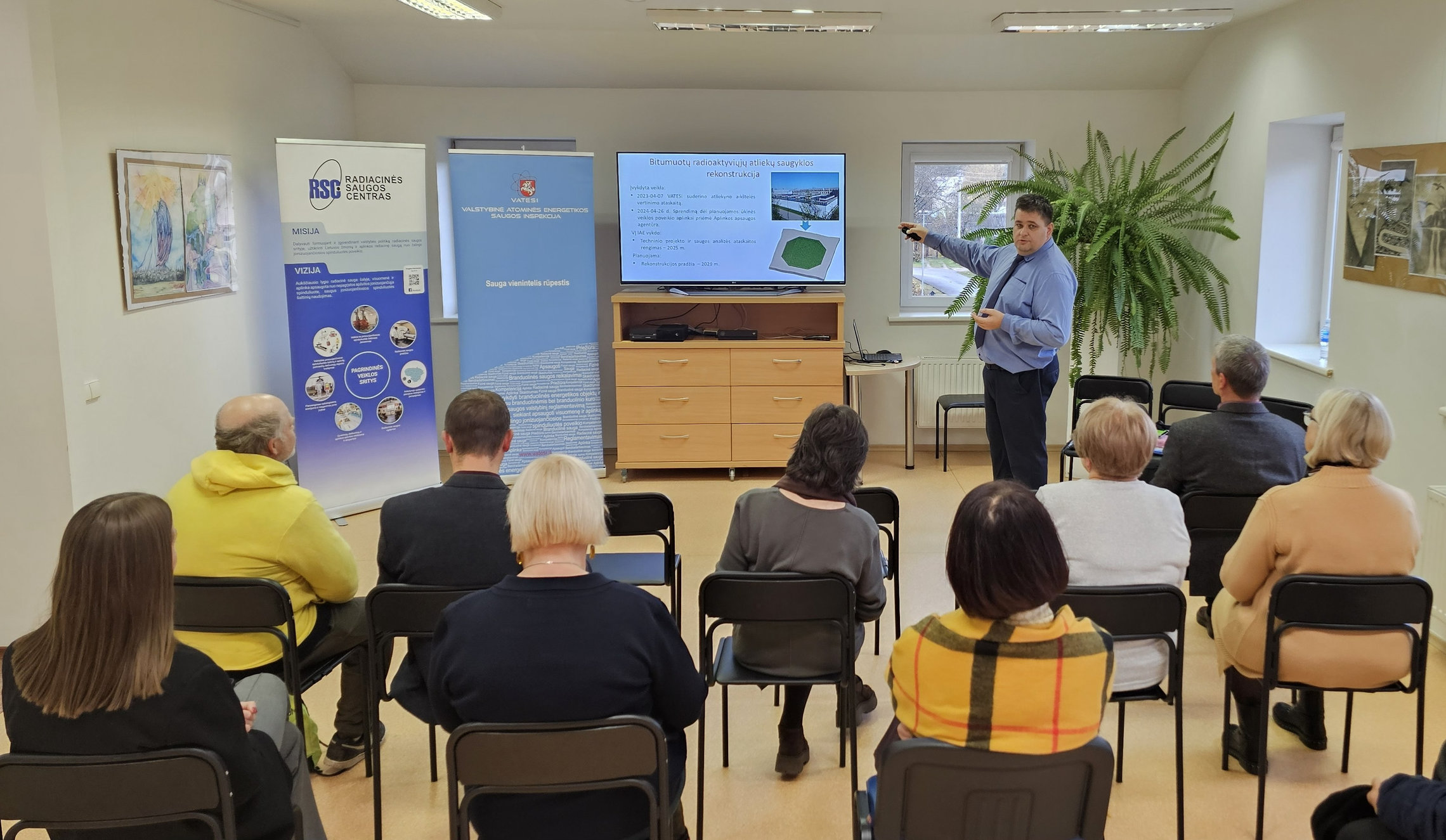
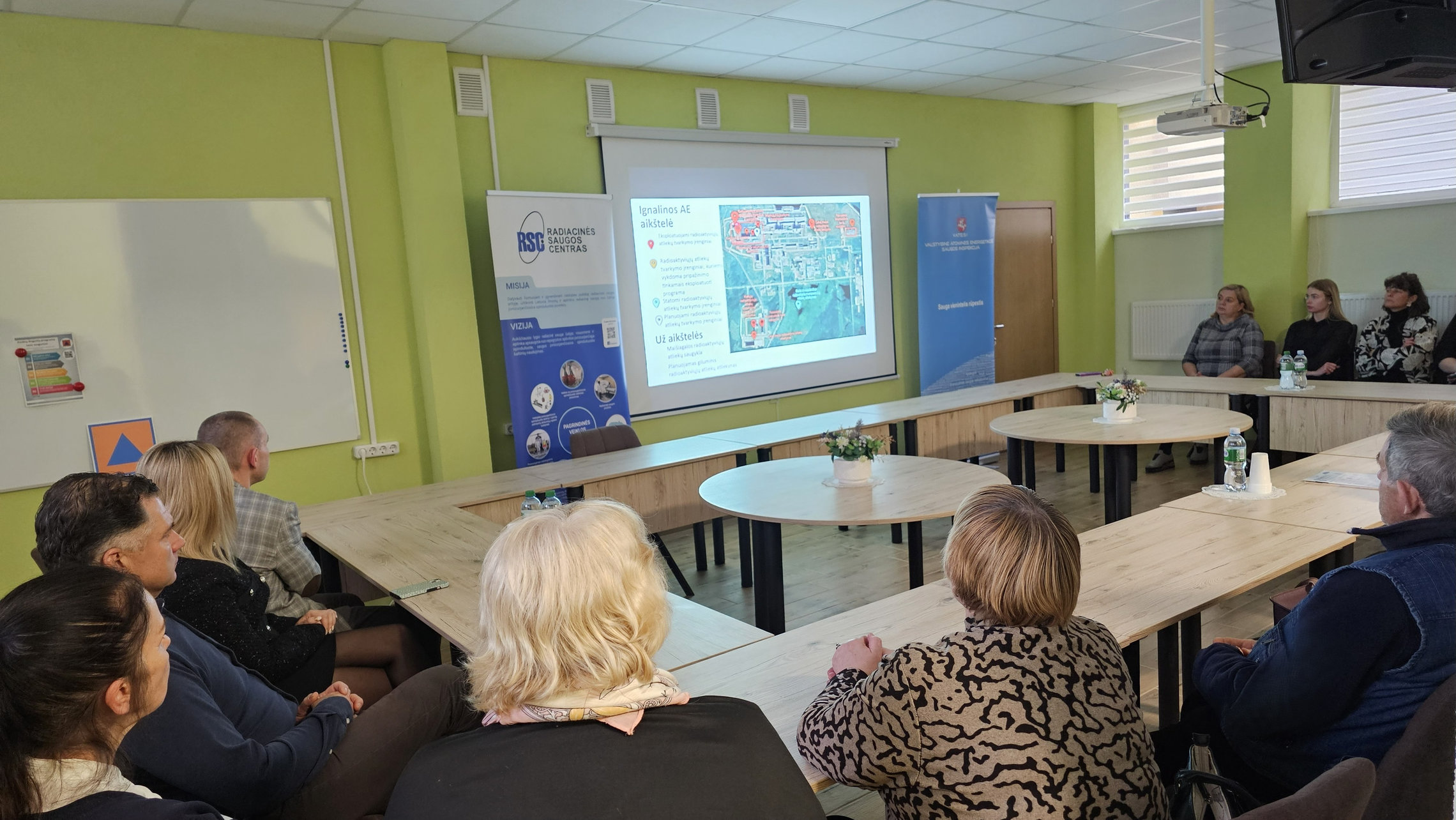
On October 16−29 representatives of the State Nuclear Power Safety Inspectorate (VATESI) and the Radiation Protection Centre (RSC) presented up-to-date information on the impact of Lithuanian nuclear facilities on public safety and the environment in Visaginas, Zarasai and Ignalina and answered questions of concern to local residents.
The impact of nuclear facilities operating in Lithuania on the environment and the country's population is extremely low. During the meeting, specialists from VATESI and RSC presented how they ensure that the radiological impact of nuclear facilities on the population and environment of Lithuania is negligible and does not exceed the established standards, and how they supervise the operation of nuclear facilities and monitor their impact.
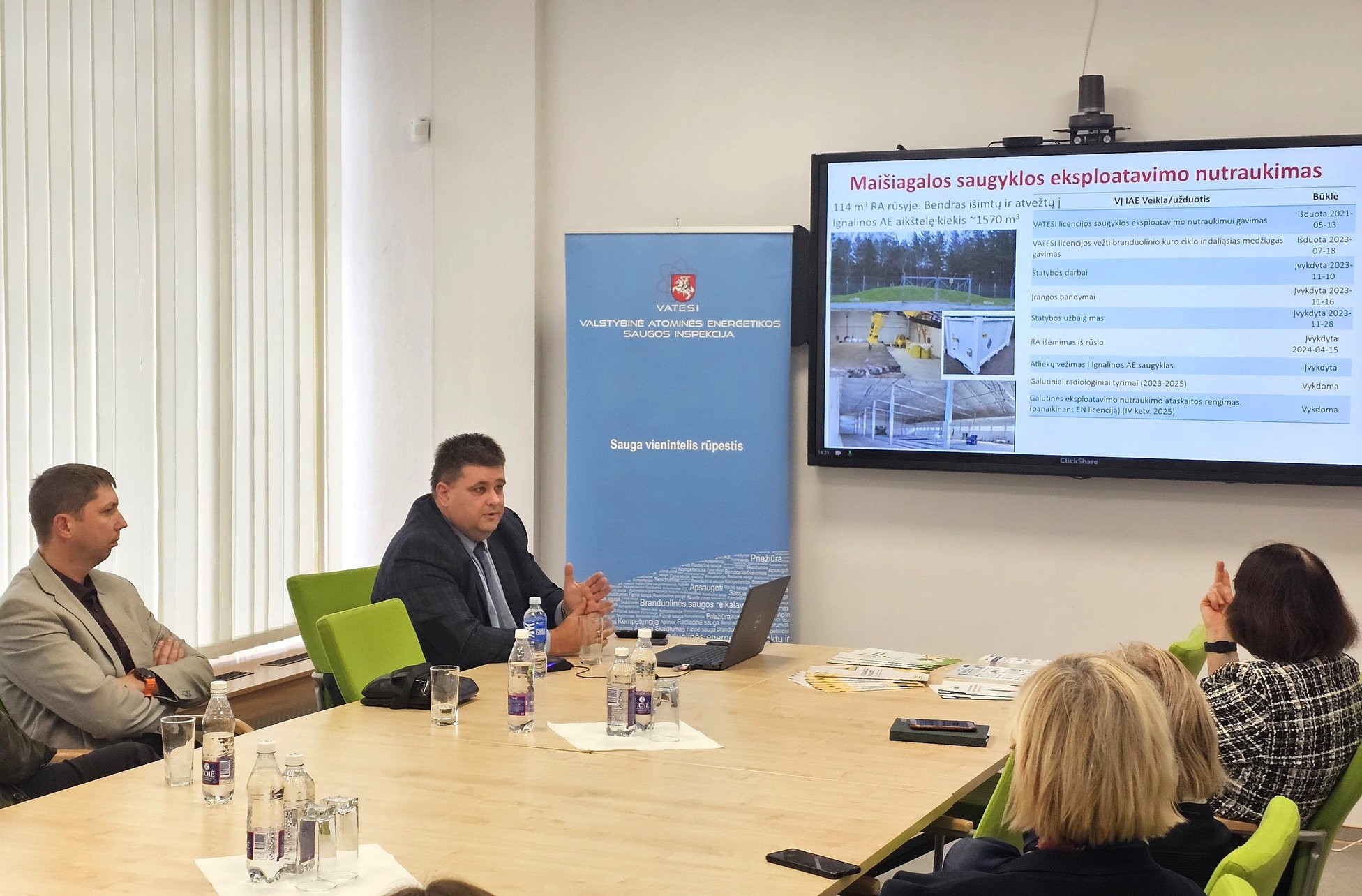
Darius Lukauskas, Deputy Head of VATESI for Radioactive Materials Control Matters, presented how the safety of the decommissioning of the Ignalina NPP is ensured in Lithuania. He familiarized the meeting participants with the progress of the Ignalina NPP decommissioning process, projects implemented and the progress over the past three years, the results of inspections carried out by VATESI, and the assessment of radiation exposure of employees and residents.
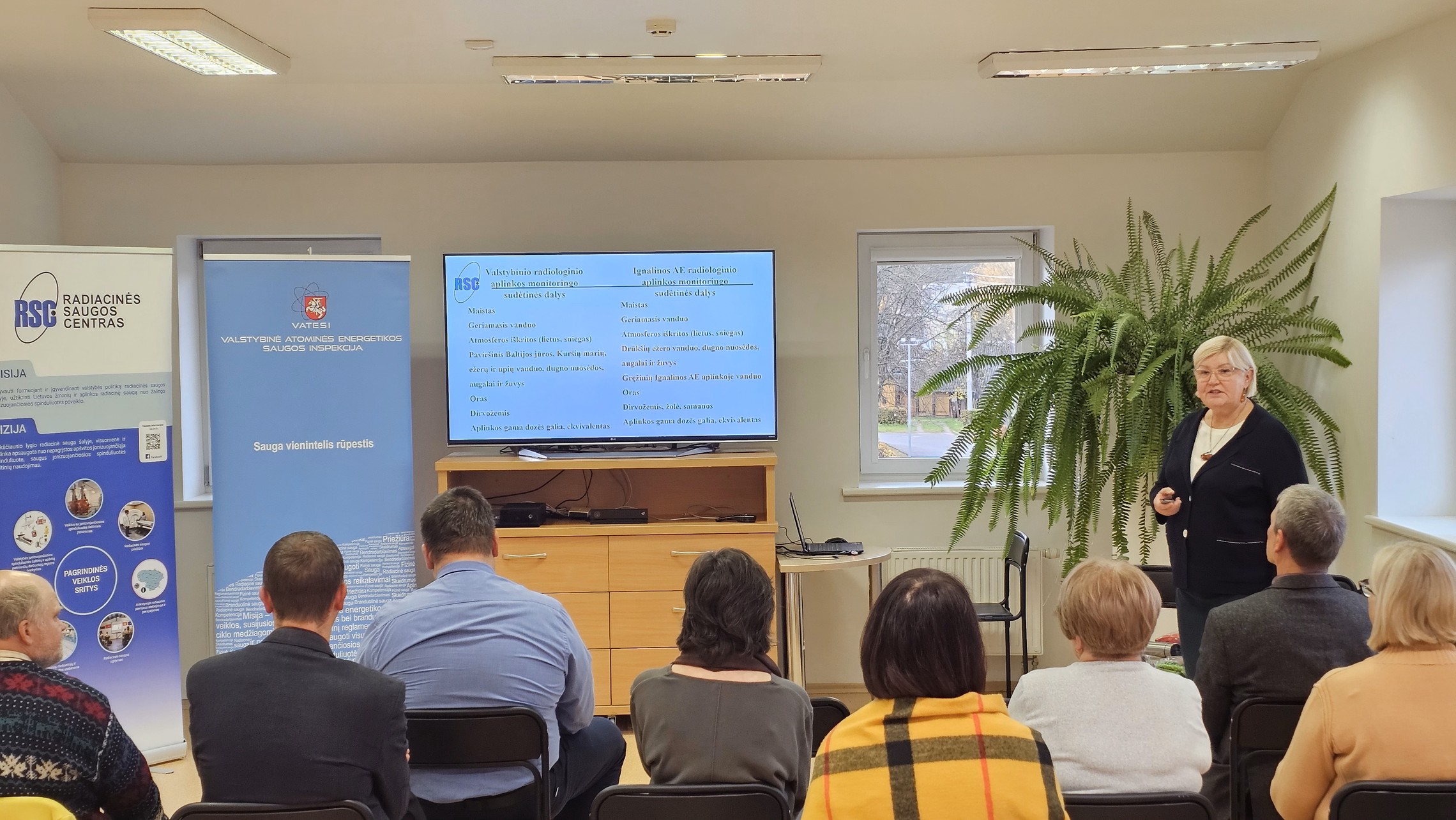
Rima Ladygienė, Head of the Public Radiation Exposure Monitoring Division at the RSC, presented the investigation conducted by the RSC and the radiation exposure experienced by the Lithuanian population from all possible sources, explaining that most of the exposure is due to natural radon gas in indoor spaces and medical X-ray diagnostic procedures.
Visaginas residents were interested in how radioactive waste was transported from the Maišiagala radioactive waste storage facility and whether the spent nuclear fuel storage facilities were sufficiently protected against conventional threats.
Zarasai residents were interested in whether environmental organizations submit proposals for VATESI draft decisions when the public is invited to participate in decision making and submit proposals. RSC specialists inquired about the suitability of using basement premises and how it is possible to check whether they are sufficiently safe in terms of natural gas radon, given that permanent workplaces are located there.
The residents of Ignalina inquired about the very long terms of implementation for the deep geological repository and whether the spent nuclear fuel storage facilities are protected from conventional threats. They were also interested in the working conditions of Ignalina NPP employees in relation to radiation exposure, the use of basement rooms, radon gas prevention methods, and measurement capabilities.
The RSC reminded everyone once again that all information about radiation levels can be monitored in real time on the website rsc.lrv.lt, where they can also find regularly updated maps showing radon measurements in indoor spaces.
These meetings with the local residents are mainly about on regularly basis to inform about the impact of facilities in the vicinity on public safety and the environment, and what measures are in place to ensure that the radiological impact on Lithuanian residents and the environment is negligible and does not exceed established standards.
Last updated: 31-10-2025
Related news:
VATESI participated in International Emergency Preparedness Exercise ECUREX-2026
Belarusian NPP safety problems remain unresolved
IAEA 70th General Conference LT highlights
Report of the IRRS mission to Lithuania published
VATESI annual publication “Nuclear Power Safety in Lithuania”